|
|
|
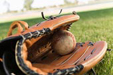
A Guide to College Baseball Bats
In the mid 1850s, when baseball was in its infancy, players made their own bats. They experimented with flat bats, round bats, and heavy bats. They ultimately discovered that the barrel shaped bat was the most effective. Today, college baseball bats...
Florida a Sporting Powerhouse
Florida is one of the most Southern of all the United States. It is known as the Sunshine State for it's warm weather and pacific climate. "Florida" is a Spanish adjective which means "flowery". Florida was discovered by a Spanish explorer during...
Outdoor Batting Cages
Batting cages are a crucial ingredient in any baseball or softball training regimen. They are used both by batting coaches and by recreational athletes to help improve a batter's speed and accuracy in hitting a ball. Outdoor batting cages are a...
Sports Views for November
Sports View By Leigh Douglas Baseball season is finally over. Would anyone really complain if they cut about 12 games off the season (is 150 not enough?). Now at least we wont have to hear about ‘the curse’, now we just have to take care of that...
The Great American Pastime; Watching
The great American pastime is watching sports. Someone once described a football game as 30,000 people in desperate need of exercise watching 22 people in desperate need of rest.
No matter the sporting event, Americans love...
|
|
| |
|
|
|
|
|
|
How to Care for Sports Memorabilia
IT'S NOT JUST A HOBBY, IT'S AN INVESTMENT!
Many collectors of sports memorabilia have their collections in
their homes or offices without really showing regard to the
preservation and the protection of the items.
I was watching an old black and white movie recently and the
scene was a newspaper guy's office in the fifties. A visitor
walks in and as he chats with the news-guy, he casually picks up
a baseball from an eggcup type of stand on his desk and turns it
over in his hand and glances at it. I think the conversation
went something like this " Freddy where did you get this, it
looks like it's got Yankee signatures on it?" Freddy catches the
ball that the visitor tosses over to him and says, "Yeah I think
it's from the late forties, my Dad had it and I sort of
inherited it." I'm watching and even though it's a movie I'm
saying YIKES, Freddy, put that thing in a proper container, you
keep throwing that ball around the office and before you know
it, bingo, no signatures left!
WHAT'S AVAILABLE TO PROTECT COLLECTIBLES?
1. If Freddy had that ball in his office today, he could buy an
acrylic display case similar to the ones found on
www.sportsplayer.net, and he could then show the ball to
visitors without fear of harming the signatures or the
ball
itself. 2. Watch the lighting where you display your
collections. If fluorescent lighting is nearby, consider
replacing it with regular household lighting as fluorescent
lighting has ultra violet rays that may damage your display,
especially if it carries an autograph. Natural sunlight is even
more likely to harm your display, so be sure to keep your
collection as far away from direct sunlight as possible. 3.
Store your collections in an area that is as close to normal
room temperatures as possible. Have you ever been to a store
that sells old books? Notice that smell? Often they will take
delivery of books that have been stored away in a box in
someone's dank and dark basement. Smells like mould, right?
Humidity kills collections!
If your hobby collection is not quite a big investment yet, it
has the possibility in the future of being worth quite a bit of
money. Be sure to pay attention to the physical protection of
your sports memorabilia. Also, talk to your insurance agent to
see if he can offer a rider to you that will cover the loss or
damage of your collection.
About the author:
John Paul writes for Sports Player Network (SPN). SPN
specializes in Authentic Sports Memorabilia. For more tips and
information, visit the SPN website at
http://www.sportsplayer.net
|
|
|
|
|
|