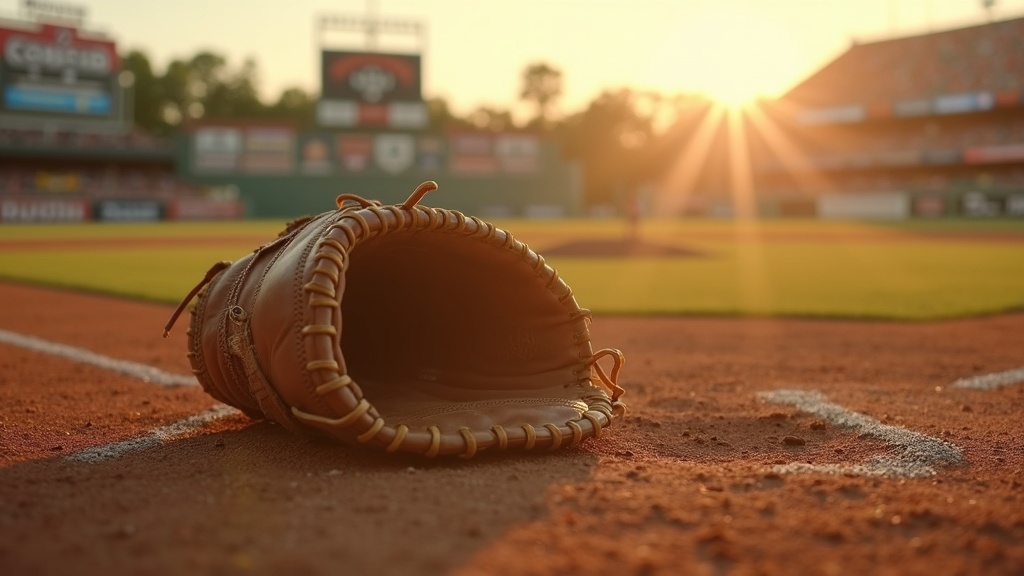
The baseball glove has evolved from a barely-there leather patch that players once wore almost apologetically into a highly engineered piece of gear shaped by position, materials science, and a century and a half of trial and error. The biggest changes came in webbing design, padding, and pocket depth — all aimed at helping fielders catch the ball more safely and more often. What started as protection for the hand became a tool that actually shapes how the game is played.
Bare hands and the first reluctant gloves
In the earliest organized baseball, gloves were seen as unmanly. Catching the ball barehanded was a point of pride, and the sting of a fastball was simply part of the job. That began to change in the 1870s, when a handful of players — catchers and first basemen especially, who handled the most punishing throws — started wearing thin, fingerless leather gloves for padding rather than performance. These early models look almost nothing like a modern glove; they were closer to a leather work glove than a piece of baseball equipment, offering a bit of cushion and little else. Fielders at other positions were slower to adopt them, worried about looking soft or losing the “feel” of the ball.
This era overlaps with the broader low-offense, contact-first style of play covered in our Dead Ball Era explained piece, where equipment of every kind — bats, balls, and gloves alike — was far more primitive than what fans see today. Fielding was rougher, errors were far more common, and the glove’s job was simply to keep hands intact through a long season.
From padding to pocket: the early 1900s
By the turn of the twentieth century, attitudes had shifted enough that gloves were common across the infield and outfield, though catchers and first basemen still used noticeably different, heavily padded designs suited to absorbing repeated impact. Fielders began sewing the fingers together or adding webbing between the thumb and index finger, creating the first true “pocket” — a small pouch where the ball could settle instead of bouncing off flat leather. This was the real turning point in glove history: once players realized a pocket helped them secure the ball rather than just cushion the sting, the glove stopped being protective gear and started becoming a fielding tool.
Manufacturing was still basic by later standards, and gloves remained relatively small and stiff compared to what came later. Players often had to break them in almost from scratch each season, working oil and repeated use into the leather to create any kind of flexibility.
Mid-century leather: bigger, deeper, more specialized
Through the middle decades of the twentieth century, glove makers experimented steadily with size, webbing patterns, and finger length. Manufacturers began producing position-specific models — a first baseman’s mitt shaped for scooping low throws, a catcher’s mitt built for blocking and framing, and increasingly distinct infield and outfield gloves. Infield gloves stayed smaller and shallower for quick transfers, while outfield gloves grew longer with deeper pockets designed to help track down long flies and line drives.
This period also saw the glove become something players developed real relationships with. Veterans passed down break-in techniques — working shaving cream or oil into the leather, wrapping a ball tightly in the pocket overnight — that are still repeated in dugouts today. The glove had become personal equipment, not just standard-issue protection, and its evolution tracked closely with how the game itself was changing across the decades our History & Eras hub covers in detail.
A dated timeline, and where historians disagree
- 1860s: the Hall of Fame says gloves first made a brief appearance in the 1860s, usually on catchers protecting sore hands. They were repurposed work gloves, bricklayers’ or driving gloves with the fingers cut off, often flesh-colored so they would not draw attention, and players padded them with anything from hay to sponges to raw meat (Hall of Fame: the evolution of baseball gloves).
- 1870: a well-known account has Cincinnati Red Stockings catcher Doug Allison wearing buckskin gloves to protect his hands, and the club’s fame spread the idea.
- 1870s to 1890s: gloves grew in the 1870s, were commonplace in the 1880s and were used by most players in the 1890s (same Hall of Fame page).
- 1883: SABR notes Arthur Irwin increased the padding, still a protective step (SABR: The Invention of the Baseball Glove).
- 1901: SABR argues the first true “baseball glove,” as distinct from a protective work glove, is the 1901 web-pocketed glove, the first change designed to help catch the ball. That is a researcher’s argument, not settled history.
- 1919–1922: Cardinals pitcher Bill Doak took a design to Rawlings of St. Louis in 1919: an adjustable laced web from thumb to forefinger forming a deep pocket that did not need to be broken in. Rawlings released the Doak model in 1920 and hired chief glove designer Harry Latina in 1922. The Hall of Fame calls it the most important design feature in 50 years.
The Hall of Fame itself warns that many sources and player memories contradict each other on the glove’s origins, which is why we credit dates to a named source and give SABR’s 1901 argument as an argument.
The webbing revolution
One of the most visible innovations in glove history is the rise of distinctive webbing patterns between the thumb and index finger. Early webs were simple crossed strips of leather, but over time makers introduced closed webs, basket webs, and other reinforced patterns that gave fielders a deeper, more secure pocket — especially useful for shortstops and third basemen fielding hard-hit balls, and for outfielders needing to trap sinking liners. These webbing designs became almost a signature detail, with certain patterns closely associated with certain positions and even certain eras of play.
Alongside webbing changes came better lacing systems, reinforced heel pads, and adjustable wrist closures, all of which let players customize fit and flexibility in ways earlier gloves never allowed.
Materials, mass production, and the modern glove
As baseball’s popularity grew through the twentieth century, glove manufacturing scaled up dramatically. Companies moved from small-batch, largely handmade construction to more standardized mass production, which made quality gloves more affordable and widely available — a shift that mattered enormously for youth and amateur baseball as the sport spread well beyond the professional ranks. At the same time, higher-end gloves for professional and serious amateur players kept pushing premium leather tanning and construction techniques to improve durability and feel.
Synthetic materials also entered the picture, offering lighter-weight, lower-cost alternatives to full-grain leather, particularly useful for younger players who need a glove that breaks in quickly and doesn’t require the long conditioning process a premium leather model demands. This split — synthetic and hybrid options for entry-level and youth play, premium leather for advanced and professional use — remains one of the clearest lines in today’s glove market.
How position shaped glove design
- Catchers: heavily padded mitts built to block and frame pitches, with a rounded, hinge-like design very different from a fielder’s glove.
- First basemen: long, scoop-shaped mitts designed to corral low and off-target throws.
- Infielders: smaller, shallower pockets that favor quick ball transfer over deep security.
- Outfielders: longer gloves with deeper pockets built for tracking and securing balls hit at speed over distance.
Gloves and the way the game is played
It’s worth remembering that better gloves didn’t just make catching safer — they changed strategy. As pockets deepened and webbing improved, defenses could reasonably attempt plays that would have been far riskier with flat, fingerless leather. Diving stops, one-handed catches, and daring relay throws all became more viable as equipment caught up with athleticism. That defensive evolution runs parallel to the offensive and cultural shifts discussed in pieces like how baseball changed after the steroid era, where equipment, testing, and rules all reshaped how the sport is played and watched.
The glove’s story also can’t be separated from the broader history of who played the game and how information and innovation spread through it. Barnstorming clubs, regional leagues, and the players chronicled in our Negro Leagues history and legacy coverage all shaped the game’s development during periods when equipment access and standardization varied widely — a reminder that glove evolution wasn’t a single, tidy timeline but a patchwork of regional and organizational change.
Where things stand today
Modern gloves are built with an eye toward precise position needs, weight distribution, and long-term durability, and elite players often work closely with equipment reps to fine-tune sizing and webbing to their exact preferences — something documented informally across decades of World Series photographs and footage, where you can trace the visual change in glove size and shape from decade to decade almost like a fashion timeline. For today’s players, from Little League to the majors, the fundamentals a coach or fitting guide will point you toward are still the same: proper size for hand and position, appropriate break-in, and materials suited to how often and how seriously the glove will be used.
Frequently asked questions about the baseball glove’s evolution
When did baseball players start wearing gloves?
Gloves started appearing in the 1870s, mostly worn by catchers and first basemen for padding rather than performance. Other fielders were slower to adopt them since bare-handed play was considered more respectable, and it took years before gloves were common across every position.
Why were baseball gloves so small in old photos?
Early gloves were designed mainly for hand protection, not for creating a deep pocket to trap the ball. Manufacturing techniques were also simpler, so gloves stayed thin, stiff, and close-fitting compared to the larger, webbed designs that developed later in the twentieth century.
What changed the most in glove design over time?
The biggest shift was the development of webbing and a true pocket between the thumb and fingers. That single change turned the glove from simple padding into an active fielding tool, enabling secure one-handed catches that were far riskier with earlier, flatter designs.
Do different positions really need different gloves?
Yes. Catchers and first basemen use distinctly padded, shaped mitts for blocking and scooping, infielders use smaller shallow-pocketed gloves for quick transfers, and outfielders use longer, deep-pocketed gloves built for tracking balls hit at distance and speed.
Are modern gloves leather or synthetic?
Both are common. Premium gloves, especially at advanced and professional levels, are typically full-grain leather for durability and feel, while many youth and entry-level gloves use synthetic or hybrid materials that are lighter, cheaper, and quicker to break in.
Reviewed against primary sources on October 3, 2026. We added the dated timeline that day; the article’s account of when the pocket arrived is general, and SABR and the Hall of Fame date it differently. Sources: Hall of Fame: glove evolution · SABR: the 1901 web-pocketed glove. Drafted with AI assistance; see our editorial policy.