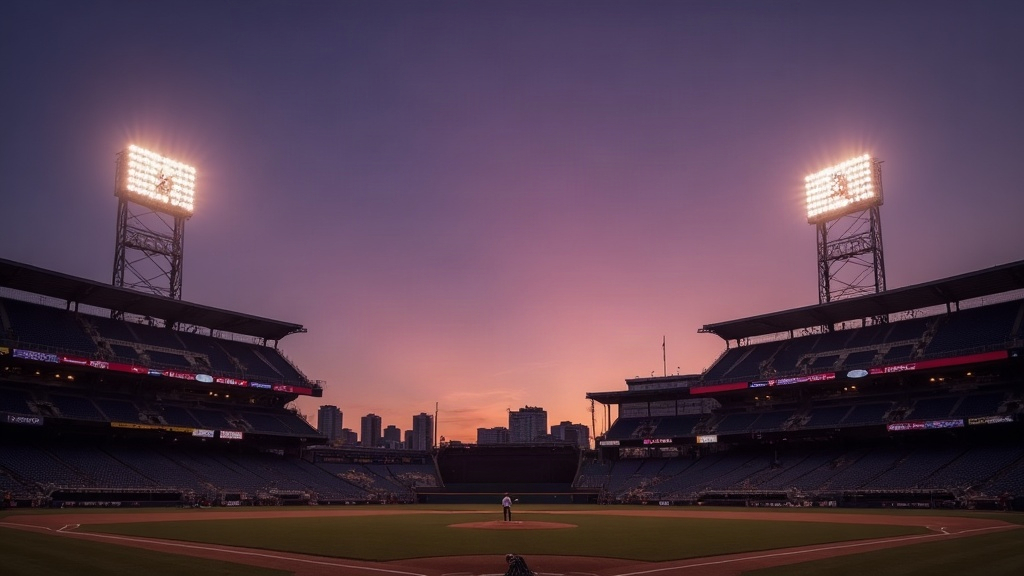
Night baseball began in the mid-1930s with weak incandescent lighting that produced roughly 100 foot-candles on the field. Over the next nine decades, the technology moved through metal halide bulbs that tripled that brightness, then into today’s LED systems that cut energy use by roughly half while giving broadcast cameras cleaner, more even light. The story isn’t just “lights got added” — it’s a steady climb in brightness, efficiency, and camera-friendly uniformity.
Why teams wanted lights in the first place
Baseball in the early twentieth century was a daytime game by necessity. Without artificial lighting, every game had to finish before dusk. That limited attendance for working fans who couldn’t get to the park on weekday afternoons.
Minor league clubs experimented with lighting first, since they had less to lose and more to gain from evening crowds. The idea reached the majors in the mid-1930s, when the Cincinnati Reds hosted what’s widely recognized as the first night game in Major League Baseball. You can read more about that broader historical arc on our History & Eras archive, which covers how the sport’s rules and customs shifted across different periods.
The move wasn’t universally popular. Some traditionalists worried lights would cheapen the game. But attendance numbers told a different story almost immediately, and other clubs began installing towers within a few seasons.
The first lights: dim, harsh, and barely enough
Those original 1935-era systems used incandescent bulbs mounted on steel towers around the outfield. By modern standards, they were crude. Output hovered around 100 foot-candles — a unit that measures how much light actually reaches the playing surface.
For comparison, a well-lit modern MLB field today often exceeds 200 foot-candles, with some systems reaching higher depending on camera requirements. Early players complained about shadows in the outfield and trouble picking up the ball off the bat. Night games in that era were playable, but far from ideal.
Incandescent bulbs also burned hot and wore out quickly. Stadiums needed constant bulb replacement, and the towers themselves were enormous, heavy structures that strained ballpark architecture. Still, the demand was there. Fans wanted evening baseball, and clubs needed the extra gate revenue.
The mercury vapor and metal halide era
By the postwar decades, lighting manufacturers moved toward mercury vapor lamps, and later metal halide bulbs, which produced a whiter, more natural-looking light than the yellowish incandescent towers. Metal halide fixtures, often rated around 1,500 watts per unit, became the standard across pro and college ballparks by the 1970s and into the 1980s.
These systems pushed field illumination up into the 200 to 300 foot-candle range — roughly double or triple what Cincinnati’s 1935 lights delivered. That mattered for player safety and performance, since better light meant batters could track pitches more reliably and outfielders could judge fly balls with fewer bad bounces of the eye.
It’s worth noting this was also the era when Wrigley Field, long the last holdout among the sport’s oldest parks, finally installed lights in the late 1980s. That one park gets mentioned in nearly every article on this subject, but the bigger, less-told story is what was happening to the bulbs themselves across the rest of the league in those same decades.
The numbers, side by side
Lighting technology didn’t improve in a straight line of small tweaks. Each major shift changed brightness, energy draw, and bulb life at the same time. A simple table makes the jump across eras easier to see.
| Era | Technology | Typical field output | Notes |
|---|---|---|---|
| Mid-1930s | Incandescent towers | ~100 foot-candles | First MLB night game era; heavy bulb turnover |
| 1950s–60s | Mercury vapor | ~150 foot-candles | Whiter light, longer bulb life than incandescent |
| 1970s–80s | Metal halide (1,500W) | 200–300 foot-candles | League-wide standard for decades |
| 2010s–20s | LED retrofits | 200–300+ foot-candles | Roughly 50–60% less energy use; better camera uniformity |
The pattern is clear. Brightness climbed steadily, but the bigger recent change is efficiency, not just raw light output.
The LED retrofit wave
Starting in the 2010s, ballparks across the majors and minors began swapping metal halide fixtures for LED systems. Dodger Stadium and Yankee Stadium were among the prominent venues to complete major LED lighting upgrades, joining a broader trend across professional sports. Lighting contractor Musco, which has installed systems at many MLB ballparks, has documented these retrofits on its own site, where it describes typical energy savings in the range of roughly 50 to 60 percent compared to metal halide systems.
LEDs offer more than lower electric bills. They turn on instantly at full brightness, unlike metal halide bulbs that need several minutes to warm up. They also allow much finer control over where light falls, reducing glare and hot spots. For a sport increasingly broadcast in high-frame-rate slow motion, that even, flicker-free light matters enormously for how a pitch or a diving catch actually looks on screen.
The U.S. Department of Energy has tracked LED adoption broadly and points to similar efficiency gains across large-scale outdoor lighting applications, not just sports venues — see its solid-state lighting research overview for the underlying technology drivers behind those savings.
Why camera uniformity became such a big deal
Older lighting systems lit the infield brighter than the outfield, or left uneven pools of shadow near the foul lines. That was tolerable for fans in the stands. It was a real problem for television.
High-speed cameras used for replay and slow-motion broadcast need consistent light across the entire field, or footage looks mismatched from one angle to another. LED fixtures, because they can be aimed and dimmed with much finer precision, let stadium engineers flatten out those inconsistencies. That’s part of why so many ballparks pursued retrofits even when their existing metal halide systems still worked fine.
This isn’t just a broadcast nicety. Better, more even lighting also affects how hitters and fielders perceive depth and spin, something that ties into the same attention to detail coaches bring to pre-game warm-up routines and visual tracking drills.
Night baseball’s ripple effects beyond the lights
Once night games became normal, they reshaped the sport’s culture far beyond the bulbs overhead. Attendance patterns shifted toward evening crowds. Broadcast schedules built around prime time became the norm for marquee matchups, including much of the World Series era once television took over as the dominant medium.
Ballpark design changed too. Architects had to account for light tower placement, glare control for hitters, and sightlines for fans sitting near those massive structures. Some of today’s most distinctive ballpark features, discussed on our Ballparks & Fan Culture archive, trace back indirectly to decisions made when lighting infrastructure was first added to older parks.
For readers curious about how other physical features of the game evolved alongside lighting, our how baseball works hub covers the broader mechanics of rules, history, and ballpark culture in one place.
Where things stand today
Nearly every MLB ballpark now runs on LED lighting, and the minor leagues have followed at a steady pace as budgets allow. The National Baseball Hall of Fame’s collections and historical materials document the sport’s broader technological shifts, including lighting, as part of the game’s physical evolution — a useful starting point if you want primary historical framing rather than secondhand summaries. See the National Baseball Hall of Fame for that kind of archival material.
The arc is simple to summarize even if the engineering wasn’t: dim and inefficient in 1935, brighter but power-hungry by the 1970s and 80s, and now bright, efficient, and camera-tuned in the LED era. Few parts of ballpark infrastructure have changed this much while staying almost invisible to the casual fan looking up at a night sky full of light.
Frequently asked questions about night baseball lighting
When was the first night baseball game played in the majors?
The widely recognized first Major League night game took place in the mid-1930s in Cincinnati, using early incandescent tower lighting. Minor league teams had experimented with night games in the years just before that, paving the way for the majors to follow.
Why did Wrigley Field wait so long to add lights?
Wrigley Field’s ownership resisted lights for decades due to neighborhood concerns and a commitment to daytime baseball as part of the park’s identity. It became the last MLB park to install permanent lighting, finally adding them in the late 1980s.
How much brighter are modern stadium lights than the original 1935 system?
Early incandescent lighting produced roughly 100 foot-candles on the field. Modern LED and metal halide systems commonly reach 200 to 300 foot-candles or more, meaning today’s fields are typically two to three times brighter than those first night games.
Do LED stadium lights really save that much energy?
Lighting contractors who’ve completed MLB retrofits generally report energy savings in the range of 50 to 60 percent compared to older metal halide systems. Savings vary by stadium size and configuration, but the efficiency gain is one of the main reasons teams have switched.
Why does stadium lighting matter for TV broadcasts?
Even, consistent lighting across the whole field helps high-speed broadcast cameras capture clean, matched footage for replays and slow motion. Older lighting systems often left uneven brightness between the infield and outfield, which created visible inconsistencies on camera.
Are minor league and youth fields lit the same way as MLB stadiums?
Not usually. Minor league parks have adopted LED lighting at a slower pace due to budget differences, and most youth and travel ball fields rely on simpler, lower-output systems. Lighting standards for amateur fields are typically set by local leagues and facility owners rather than professional guidelines.
How this article was made. It was drafted with AI assistance and published after automated checks. It has not been checked line by line against primary sources; articles that have been say so in a dated note. See our editorial policy.