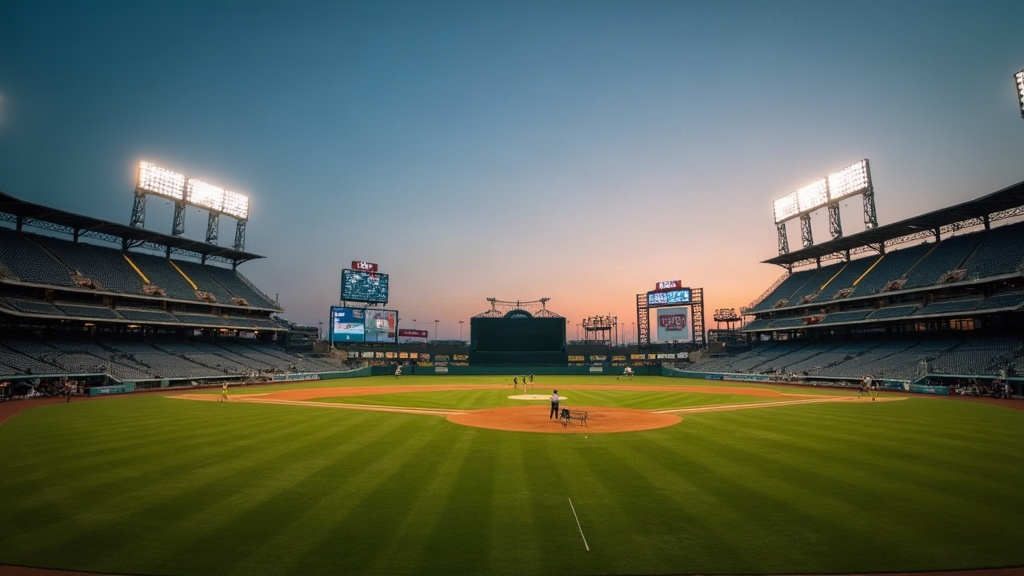
The All-Star Game began in 1933 as a one-off event tied to a Chicago world’s fair, and baseball has been rewriting how it chooses players ever since. Fans did not get a real vote until 1947, lost it again after a ballot-stuffing scandal in 1957, and got it back in 1970. The rules for who plays and how a tie is settled have changed too, most recently in 2022.

1933: Arch Ward’s idea
Chicago Tribune sports editor Arch Ward lobbied for an All-Star Game that would bring the best players together in a charitable event. Before 1933, players from the American and National Leagues met only in the World Series, and many stars went whole careers without facing the other league’s best. The first game was played at Comiskey Park in Chicago as part of the city’s Century of Progress Exposition, and Babe Ruth hit a two-run homer in an American League win (MLB.com: Ruth leads AL to first All-Star victory, MLB.com: All-Star Game history by decade).
1947: the first real fan ballot
For years fans voted in various polls that did not decide anything. In 1947 Ward created a ballot that decided who started: the fans’ choices would start the game and play at least three innings. It ran in 192 newspapers and The Sporting News, and more than two million people voted. Joe DiMaggio drew the most votes, according to MLB.com (MLB.com: All-Star fan vote has storied history).
Managers did not like being told whom to start. In 1950 the fans elected Cubs outfielder Hank Sauer, and National League manager Burt Shotton said he would start Brooklyn’s Duke Snider instead. Commissioner Happy Chandler announced that Sauer would start, saying baseball had committed to play the men the fans chose (MLB.com).
1957: Cincinnati stuffs the ballot box
In 1956, five Cincinnati Reds were voted into the National League lineup, which raised eyebrows. In 1957 the Reds’ fans went further, using pre-marked ballots printed in the Cincinnati Enquirer, with bars joining the campaign. An investigation found that more than half of the National League ballots came from Cincinnati, and seven Reds were voted into the starting lineup. Commissioner Ford Frick stepped in just before the game and removed outfielders Gus Bell and Wally Post. He also took the vote away from fans, a right that was not restored until 1970 (MLB.com: Looking back at the 1957 All-Star Game). Five Reds still started that game.
1958 to 1969: no fan vote
For twelve seasons the fans had no say. Ballots returned in 1970 and have stayed, though the mechanics have changed from newspaper clip-outs to online and app voting.
How the roster is built today
MLB.com’s 2026 roster explainer lays out the current system (All-Star Game roster rules FAQ):
- Fans pick the starters. The nine starting position players in each league, including the designated hitter, are chosen in two phases of voting. In the first, fans vote at every position; the top overall vote-getters start automatically. In the second, called the Ballot Finals, fans choose between the two finalists at each position.
- Players pick 17 more in each league: eight pitchers (five starters and three relievers) plus a backup at each position.
- The Commissioner’s Office adds six in each league (four pitchers and two position players) and must make sure every club has at least one All-Star.
- The total is 20 position players and 12 pitchers per league. The Commissioner can also add special selections to honor distinguished active players, and those do not count toward team representation.
2002: a tie, then a change
The July 9, 2002 game in Milwaukee ended 7–7 after 11 innings when both managers ran out of pitchers, and Commissioner Bud Selig declared it a tie (SABR: All-Star Game ends in a historic tie). MLB then tied World Series home-field advantage to the All-Star result starting in 2003. That ran through 2016; the 2017 collective bargaining agreement ended it (MLB.com: 2002 All-Star Game’s tie led to changes).
The tie rule changed again in 2022. Under the current agreement, a game tied after nine innings is decided by a home run swing-off instead of extra innings: each team picks three hitters, each gets three swings, and the most home runs wins. The All-Star Game had gone to extra innings 13 times, most recently in 2018, before the first swing-off, at Truist Park in Atlanta in 2025. The game was tied 6–6 and Kyle Schwarber homered on all three swings to give the National League a 7–6 win (MLB.com: swing-off tiebreaker).
Selections also feed a player’s Hall of Fame case; see how Hall of Fame induction works, and for the other event that decided home-field advantage in those years, the history of the World Series.
How the selection process changed, at a glance
| Period | Who picked the starters |
|---|---|
| 1933 to 1946 | Fan polls existed but did not decide starters (per MLB.com) |
| 1947 to 1957 | Fan ballot decided starters |
| 1957 | Cincinnati ballot-stuffing; Frick removes two Reds starters and ends fan voting |
| 1958 to 1969 | No fan vote |
| 1970 to now | Fan vote restored; today in two phases |
Frequently asked questions about the baseball All-Star Game
When was the first MLB All-Star Game played?
1933, at Comiskey Park in Chicago, as part of the Century of Progress Exposition. The American League won, and Babe Ruth homered.
Why did fans stop voting for All-Star starters in 1958?
Cincinnati fans stuffed the 1957 ballot, with seven Reds elected, and Commissioner Ford Frick removed the vote after that game. It returned in 1970.
How many players are on an All-Star roster?
20 position players and 12 pitchers per league, 32 in all, plus any special selections the Commissioner adds.
Does every MLB team get a representative?
Yes. MLB’s roster rules require the Commissioner’s Office to ensure each club has at least one All-Star.
What was “This Time It Counts”?
The slogan for the 2003–2016 era in which the league that won the All-Star Game got home-field advantage in the World Series, a rule introduced after the 2002 tie.
Reviewed against primary sources on October 3, 2026. We rewrote this article that day after finding it said fans voted directly from 1933 to 1957, which is not what MLB.com says, and that it had no sources for its roster claims. Sources: MLB.com: fan vote history · MLB.com: 1957 game · MLB.com: roster rules FAQ · MLB.com: swing-off tiebreaker. Drafted with AI assistance; see our editorial policy.