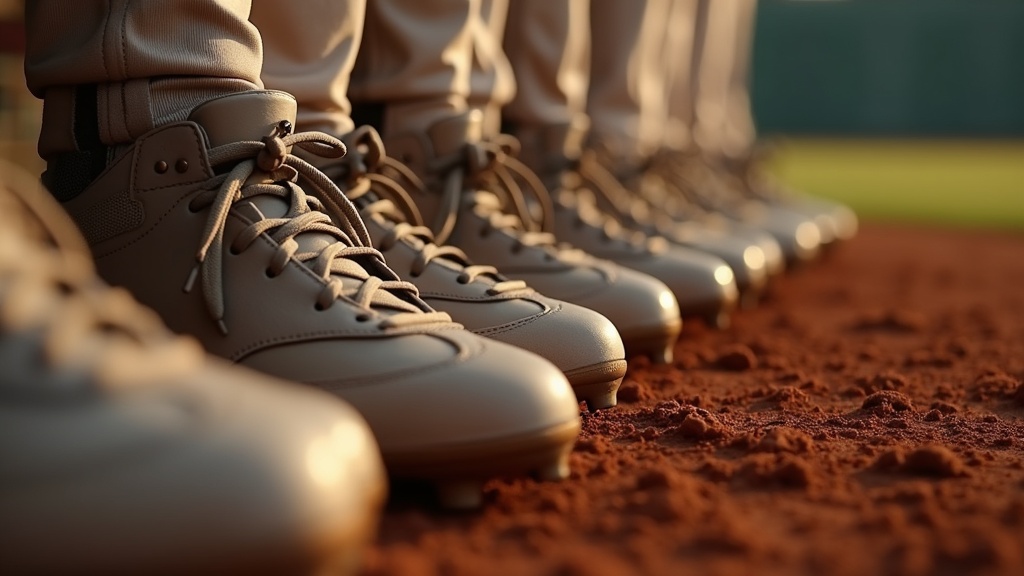
The short answer: metal cleats grip hard dirt and grass best and are standard in high school, college, and pro ball, but many youth leagues ban them; molded (plastic) cleats are the safer, most versatile all-around choice for younger players and everyday practice; and turf shoes are built for artificial surfaces, indoor cages, and hard-packed practice fields where spikes aren’t needed or allowed. Which one you need really comes down to your league’s rules, your age group, and what surface you’ll be standing on most often.
If you’ve ever stood in a sporting goods aisle staring at three walls of nearly identical-looking shoes, you’re not alone. The differences aren’t just cosmetic — they affect traction, safety rules, and even how a field’s grounds crew feels about you. Here’s what actually separates the three, and how to think through the choice without overspending or buying the wrong thing twice.
What the rulebooks actually say about metal cleats
The question that brings most people here, “are metal or molded cleats better,” mostly gets answered by the league before the shoe. Here is what two big youth programs publish:
| Program and division | Metal cleats | Source |
|---|---|---|
| Little League: Little League (Majors) and below | Not permitted. Molded cleats are permissible. Removable cleats are allowed if no metal remains exposed once they are removed. | Little League help center |
| Little League: Intermediate (50/70), Junior and Senior | Permitted | Little League help center |
| PONY (2026 rulebook, Rule 8-D) | Permitted, as are rubber-soled and rubber-cleated shoes. Altering metal cleats, such as sharpening them, is prohibited. | PONY helpdesk |
Little League points to Rule 1.11(h) of its rulebook for the full text. Its help-center page is dated, so confirm in the current rulebook or with your league. Not sure which Little League division applies? Use our league age finder. Checked October 3, 2026.
In practice that means a Little League Majors player (league ages 9–12) needs molded cleats, while a Junior League player (12–14) may use metal. PONY leaves the choice to the family at every age, but individual leagues and tournament hosts can add their own limits. Cal Ripken and Babe Ruth League publish their own equipment rules, which we could not retrieve, so check with your local league.
Metal cleats: maximum grip, most restrictions
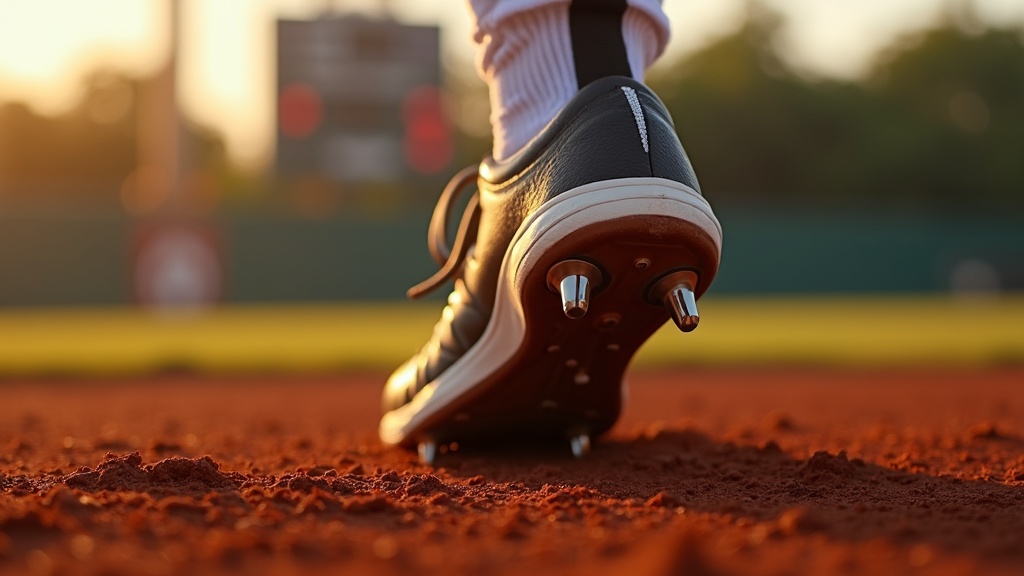
Metal spikes are what you picture when you think of a big leaguer digging into the batter’s box or exploding out of the batter’s box on contact. They bite into dirt and natural grass better than any other option, which matters when you’re pushing off first base or planting to throw from the outfield. That extra traction is why metal is the standard at the high school varsity level and above, and why most college and professional players wear them exclusively.
The tradeoff is exposure to risk during slides and collisions, which is why a lot of youth organizations — including many Little League divisions — restrict or outright ban metal spikes for younger age groups. Rules vary by league and even by age bracket within the same organization, so it’s worth checking your specific league’s equipment policy before buying, rather than assuming what worked for an older sibling’s team applies. If you’re still sorting out how your child’s division is structured in the first place, our guide to Little League divisions and age brackets is a good starting point.
Metal cleats also wear down field surfaces more than molded ones, which is part of why some travel teams and tournament host fields ask players to switch out of metal before infield warmups on certain surfaces.
Molded cleats: the all-purpose choice
Molded cleats use permanently attached plastic or rubber studs instead of metal spikes. They’re allowed in nearly every youth league, most middle school and rec programs, and plenty of adult beer-league setups, which makes them the default “safe bet” if you’re not sure what you’ll need. They still provide solid traction on grass and dirt — not quite what metal offers, but more than enough for the vast majority of players below the varsity level.
For coach-pitch, machine-pitch, and early travel-ball years, molded cleats are typically the right call simply because they’re allowed everywhere and hold up well across different field conditions. If your family is just getting oriented to what that early competitive landscape even looks like, it can help to read up on coach-pitch vs. machine-pitch formats or on whether travel baseball is the right fit for your kid before investing heavily in gear at all.
One practical note: molded cleats generally last longer than metal because there’s no spike replacement or bending to worry about, and they’re often a few dollars cheaper — a real consideration when you’re already budgeting for bats, gloves, and tournament fees. Our breakdown of what travel baseball actually costs touches on how gear spending fits into the bigger picture.
Turf shoes: built for a different job
Turf shoes look similar to molded cleats but swap the raised studs for a flatter sole covered in small rubber nubs. They’re designed for artificial turf fields, indoor batting cages, and hard, dry practice surfaces where actual cleats would either grip too aggressively (twisting an ankle in ways spikes shouldn’t) or simply chew up the surface. A lot of indoor training facilities require turf shoes or clean sneakers and won’t let players on the floor in metal or molded cleats at all.
Plenty of serious players keep a pair of turf shoes in their bag specifically for warmups, bullpen sessions, or facility workouts, then change into game cleats right before taking the field. It’s not an either/or choice for most players past a certain level — it’s an “in addition to.”
Quick comparison
| Type | Best surface | Typical allowed level | Traction |
|---|---|---|---|
| Metal | Natural grass, dirt infields | High school varsity and up (check league rules below that) | Highest |
| Molded | Grass, dirt, general use | Most youth, rec, and adult leagues | Solid, all-purpose |
| Turf | Artificial turf, indoor facilities, hard ground | Any level, situational use | Lower, but stable on hard surfaces |
How to actually decide
Start with your league’s rulebook, not the shoe wall. Age-bracket rules on metal spikes are one of the more commonly enforced equipment restrictions in youth baseball, and umpires or tournament staff will check before a game if there’s any doubt. Once you know what’s allowed, think about where your player spends the most practice time — a family doing most of its work on a well-kept grass field has different needs than one training twice a week in an indoor facility with artificial flooring.
Fit matters as much as type. A cleat that’s too loose in the heel undercuts whatever traction advantage the spike pattern is supposed to give, and kids in particular tend to be sized in cleats the way they’re sized in regular shoes — with room to grow that can actually work against stability during a season. If your child is between sizes, sizing slightly snug with a good sock tends to serve better than sizing up for longevity.
It’s also worth thinking about cleats the same way you’d think about any other piece of gear that needs to match the level of play: not overbuying for a beginner, but not skimping on something that affects how a player moves. The same logic applies to picking a first glove or bat — our guides on choosing the right youth glove size and how to choose a baseball bat walk through that balance in more detail, and if you’re outfitting a player for the first time, our broader Equipment & Gear hub has the full rundown across bats, gloves, and helmets too.
A note on field care and etiquette
Metal cleats leave more visible marks on infield dirt and grass than molded ones, which is part of why some facilities — especially indoor cages and shared community fields — post signs restricting them regardless of league rules. It’s a small courtesy that matters more than players realize: divots from metal spikes affect how a ball hops for the next group using the field, whether that’s another travel team or a rec league game an hour later.
Frequently asked questions about baseball cleats
Are metal cleats allowed in Little League?
Not in Little League (Majors) and below, where metal cleats are not permitted and molded cleats are. Metal is permitted in the Intermediate (50/70), Junior and Senior divisions, per Little League’s rule on footwear (Rule 1.11(h)). Local leagues can add their own limits, so check with yours before buying a pair.
Can you wear molded cleats on turf?
You can in a pinch, and many players do without issue, but dedicated turf shoes are designed specifically for artificial surfaces and tend to feel more stable and comfortable over a full practice or game than molded cleats do on turf.
Do metal cleats really make a difference in performance?
Most players who’ve worn both notice better grip and quicker first-step acceleration in metal cleats on natural grass and dirt, especially when cutting or exploding out of the box, though the difference is smaller on artificial turf or hard-packed surfaces.
What cleats should a beginner buy first?
Molded cleats are the safest starting point for most beginners since they’re allowed in nearly every youth league, hold up well, and don’t require guessing about age-bracket restrictions the way metal spikes do.
How often should baseball cleats be replaced?
It depends on usage and growth more than a fixed schedule — check for worn-down studs, torn stitching, or a shoe that no longer fits snugly, and replace sooner for a growing youth player than you would for an adult playing occasionally.
Reviewed against primary sources on October 3, 2026. We added the exact league rules to this article that day; before, it told readers to look them up. Sources: Little League: metal spikes · PONY: cleat rule. Drafted with AI assistance; see our editorial policy.