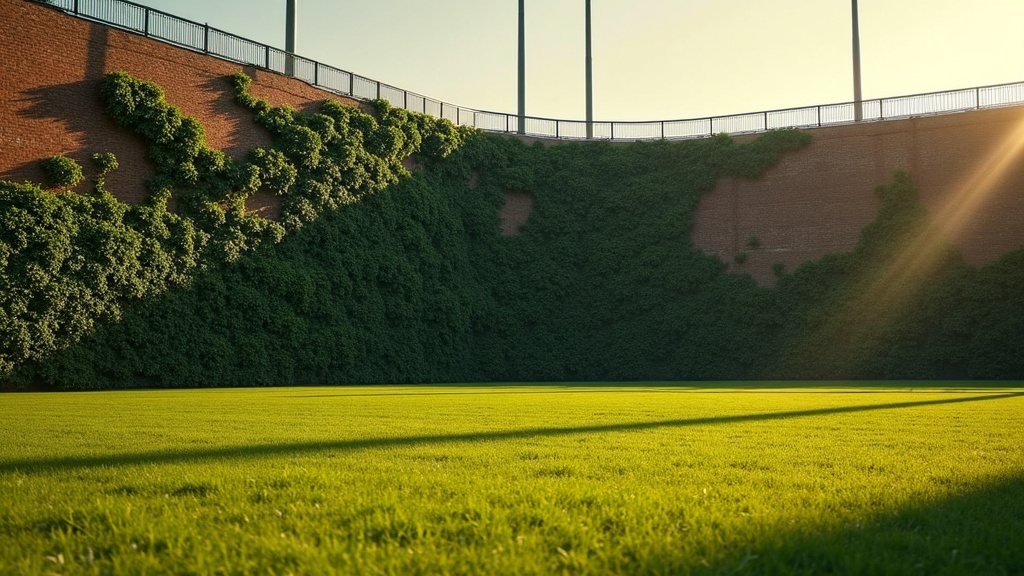
Wrigley Field’s outfield wall is 11.5 feet of brick that the Cubs rebuilt in 1937, and the ivy on it went in that same September. The outfield distances, 355 feet to left, 400 to center and 353 to right, have not changed since that rebuild. Who actually planted the ivy is a different matter: the Cubs’ own pages, MLB.com and the Hall of Fame tell it three different ways, which we lay out below. For a side-by-side with other parks, see outfield walls compared.
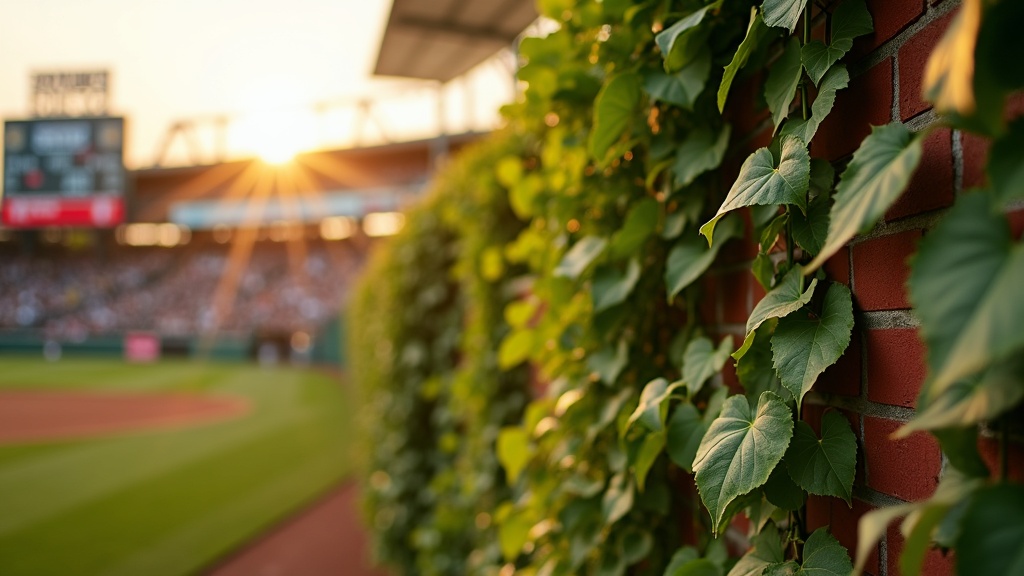
The numbers
- Wall height: the Cubs list the bleacher wall at 11.5 feet (Cubs: Wrigley Field history).
- Distances: 355 feet to left field, 400 to center, 353 to right (same page). The Hall of Fame gives the left-field figure as 355 feet 7 inches and says the dimensions have stood since the 1937 rebuild.
- Length of the wall: the Hall of Fame says the outfield wall covers 1,003 feet.
- The basket: the Cubs say the basket attached to the top of the wall was built in 1970.
A short history of the park behind the wall
Wrigley Field was built in 1914 as Weeghman Park, home of the Federal League’s Chicago club. When the Federal League folded after the 1915 season, Charles Weeghman bought the Cubs and moved them in. The first National League game there was April 20, 1916; the park became Cubs Park in 1920 and was named Wrigley Field in 1926 for owner William Wrigley Jr. (Cubs history). It is the second-oldest ballpark in the majors, behind Fenway Park.
1937: the wall, the bleachers and the ivy
The Hall of Fame describes the 1937 project as part of a plan by owner Phil Wrigley for a more comfortable, park-like ballpark. The bleachers were rebuilt larger and elevated, the outfield wall was rebuilt in red brick with six gates, and a new $100,000 scoreboard went in. The renovated park opened for the Cubs’ last home series on October 1, 1937 (Hall of Fame: Wrigley Field ivy).
Who planted the ivy? Three official versions
- The Hall of Fame credits Bill Veeck, head groundskeeper Charlie Dorr and assistant Cotton Bogren. In early September, it says, they strung five strands of copper wire (5,015 feet in all) across the wall overnight, draped Boston ivy on the wire, and planted more ivy at the base mixed with faster-growing Japanese bittersweet.
- The Cubs’ history page says the original vines were bought and planted by Veeck in September 1937, with bittersweet strung from the top of the wall and ivy planted at the base.
- MLB.com’s Cubs news quotes team historian Ed Hartig calling Veeck’s role “greatly exaggerated” and says the Clavey family, who ran area nurseries and cared for Wrigley properties, sold and planted the ivy. A photograph by George Brace dated September 4, 1937 shows Elmer Clavey directing the planting, nearly a month before Veeck said he did it (MLB.com: origin of the ivy).
The versions agree on the month (September 1937), on Boston ivy mixed with Japanese bittersweet, and on the context of the rebuild. They disagree on who. We have no way to settle that from here, so we report all three.
How the ivy changes play: the ground rules
The Cubs post these Wrigley Field ground rules for the outfield wall (Cubs: Ground Rules):
- A fair ball that lodges in the vines on the bleacher wall is two bases.
- A fair ball that enters the vines and rebounds onto the field is in play.
- A fair ball that strikes the railing or screen attached to the wall and rebounds is in play; one that lodges in the screen is two bases.
That is why a ball that disappears into the ivy stops the play: umpires rule it a double rather than leave an outfielder hunting for it. The wall itself is still solid brick under the vines, so outfielders treat it as a hazard.
Why the ivy has lasted
The Hall of Fame notes the ivy is mostly common Boston ivy, the same vine that covers many college walls, and that it became part of the brand of the park: ivy, brick, bleachers and a manual scoreboard. The brick is bare on Opening Day and green by midsummer; MLB.com notes that if the Cubs play deep into the fall, the ivy changes color in October. Babe Ruth’s “called shot” in the 1932 World Series was hit at Wrigley before the ivy existed; our article on it sorts out what evidence supports it. For other famous park features, see the Green Monster.
Frequently asked questions about Wrigley Field’s ivy walls
When was the ivy planted at Wrigley Field?
September 1937, as part of that year’s rebuild of the bleachers and outfield wall. MLB.com’s historian points to a photo dated September 4, 1937.
Who planted the ivy?
Sources differ. The Hall of Fame and the Cubs’ history page credit Bill Veeck (with groundskeepers, in the Hall’s telling); MLB.com’s Cubs historian credits the Clavey family and calls Veeck’s role exaggerated.
What happens if a ball gets stuck in the ivy?
Under the Cubs’ posted ground rules, a fair ball that lodges in the vines on the bleacher wall is two bases.
How high is the wall?
The Cubs list the bleacher wall at 11.5 feet.
Is the ivy real?
Yes. It is mostly Boston ivy with Japanese bittersweet mixed in, according to the Hall of Fame and MLB.com.
Reviewed against primary sources on October 3, 2026. We rewrote this article that day: the earlier version credited the ivy to Bill Veeck without noting that the Cubs’ own historian disputes it, described the wall as older than the ivy (both date to the 1937 rebuild), and gave no figures. Sources: Cubs: Wrigley Field history · MLB.com: origin of the ivy · Hall of Fame: Wrigley Field ivy · Cubs: ground rules. Drafted with AI assistance; see our editorial policy.
Related reading
Ballpark outfield walls compared, Baseball Superstitions Players Actually Believe.