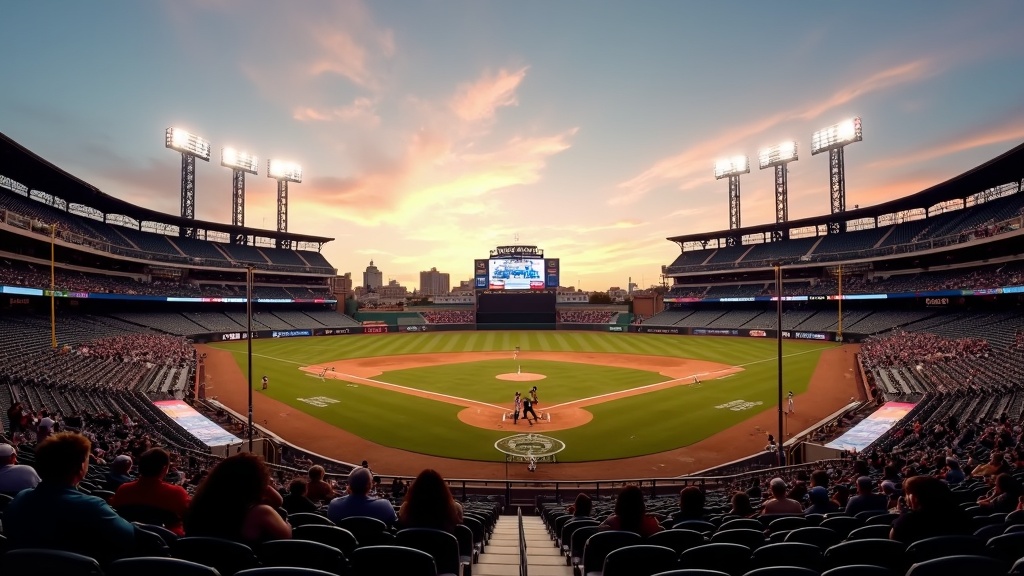
The seventh-inning stretch is the moment, roughly two-thirds of the way through a nine-inning baseball game, when fans rise from their seats to stand, stretch, and often sing together before play resumes. Its exact origin is murky and debated by historians, but the tradition has been documented in some form since the late 1800s and became a fixed part of the game’s rhythm well before radio and television turned it into a shared national moment. Today it’s less about literally loosening tired legs and more about a communal pause — a bit of ballpark theater that ties fans in every stadium to more than a century of baseball custom.
Where the tradition actually comes from
Ask five baseball historians where the seventh-inning stretch started and you’ll likely get five slightly different answers, which is part of the charm. One long-circulated story credits a letter, written by a spectator in the 1800s, describing fans standing up partway through a game because they’d been sitting on hard benches for a long stretch of innings. Another popular tale credits President William Howard Taft, who stood to stretch his legs after the top of the seventh at the Washington Senators’ opener on April 14, 1910 while the crowd rose out of respect. Sources treat it with skepticism: a stretching custom is documented decades before Taft.
What’s more solidly agreed upon is that by the early 20th century, standing and stretching mid-game was already a known habit at ballparks, tied loosely to the idea that fans — like players — could use a moment to shake off the stiffness of sitting through a long, slow-paced game. This lines up neatly with the sport’s identity in the years covered on our History & Eras hub, when baseball was establishing many of the customs that still define it. If you enjoy digging into how the game looked and felt generations ago, the same curiosity applies well to something like the Dead Ball Era, a period when the sport’s pace, strategy, and in-game rituals were being shaped in ways that still echo today.
Three origin stories, with dates
- 1869, Cincinnati: Cincinnati Magazine found, in 1982, a letter by Reds organizer Harry Wright from 1869 describing fans who “all arise between halves of the seventh inning, extend their legs and arms, and sometimes walk about” to relieve sitting on hard benches. It is the earliest documentation MLB.com cites (MLB.com: the history of the seventh-inning stretch).
- June 1882, Manhattan College: Brother Jasper Brennan, the prefect of discipline and baseball manager, called a timeout in the seventh inning of a game against the semipro New York Metropolitans because students in the stands were restless on a hot day, and let them stand and stretch. He kept the practice at home games, and the New York Giants supposedly adopted it after an exhibition against Manhattan. The college claims the invention; an 1883 Sporting Life article describes a crowd shouting “Stretch!” in many large cities (same MLB.com article; also SABR: Mains on the stretch).
- April 14, 1910, Washington: the Taft story above. SABR’s summary says it “doesn’t seem to be true.”
MLB.com’s conclusion is that we may never know whose idea it was, though the 1869 letter shows the habit predates both the college and the president. SABR notes the stretch is unique among American sports: no other has a specific break where spectators are invited to stand and sing.
Why the seventh inning specifically?
There’s no single documented rule that mandated the stretch land in the seventh inning rather than the sixth or eighth — it seems to have simply settled there over time as games reached their later, more tense stages without yet arriving at the final push. By the seventh, most fans have been in their seats for well over an hour, starters are often nearing the end of their outings, and the crowd’s energy naturally dips before the late-inning drama begins. Standing up, taking a breath, and singing along became a convenient, almost instinctive way to reset that energy right before the stretch run of the game.
It’s a small piece of the sport’s culture, but it fits neatly alongside other traditions and unwritten habits that make a day at the yard feel distinct from watching any other sport — the kind of thing explored further on our Ballparks & Fan Culture hub, where fan rituals and stadium customs get their due attention.
The song that made it famous
No discussion of the stretch is complete without “Take Me Out to the Ball Game,” the song most associated with the ritual today. Written in the early 1900s, the tune wasn’t originally created as a seventh-inning anthem — it was a popular Tin Pan Alley song about baseball in general. Over the following decades, ballparks began playing it during the stretch, and it gradually became inseparable from the moment itself, to the point where many fans today assume it was written specifically for that purpose.
The song’s connection to the stretch deepened enormously in the latter half of the 20th century thanks to broadcasters and ballpark organists who made singing along a nightly event. The most famous of these moments happened at Wrigley Field, where a beloved broadcaster’s habit of leading the crowd in song turned into an iconic, widely imitated tradition that other teams eventually adopted in their own ways. That kind of ballpark moment — simple, communal, unscripted — is exactly the sort of detail that makes baseball’s history so rich, in the same way understanding why the infield is called a diamond adds a layer of appreciation to something fans see every single game without ever questioning.
How teams have made it their own
While “Take Me Out to the Ball Game” remains the universal seventh-inning anthem, many teams have layered their own local traditions on top of it. Some ballparks add a second song immediately after, tied to a specific city, team history, or fan tradition that’s grown organically over the years. Other clubs use the stretch as a moment for community tributes, military appreciation, or charity recognition rather than pure celebration. None of this is dictated by MLB rulebooks — it’s culture built by fans, front offices, and broadcasters over generations, which is part of why no two ballparks feel quite the same during that pause in play.
This local flavor is a good reminder that baseball’s biggest traditions often aren’t handed down from a rulebook at all. The stretch has no official status in the sport’s rules the way something like the strike zone or the balk does — if you’re curious how those codified rules actually work, our Rules Explained hub is the place to start. The stretch, by contrast, survives purely because fans keep choosing to do it.
A tradition that has quietly evolved
Like most long-running customs, the seventh-inning stretch hasn’t stayed frozen in time. In the years after major national tragedies, some ballparks began pairing the usual stretch with an additional patriotic song, a practice that in various forms has stuck around at many stadiums ever since. Some teams have their own beloved additions that have become as anticipated as the traditional tune itself, turning the seventh-inning break into a genuine crowd highlight rather than just a pause in the action.
It’s a small illustration of how baseball’s culture keeps layering new memories onto old ones — not unlike how a single World Series moment can become permanently woven into the sport’s identity, the kind of storyline covered in depth on our page about the history of the World Series. The stretch may be a minor ritual compared to a championship, but it shows the same pattern: something simple catches on, gets repeated enough times, and eventually becomes part of what people expect from the experience of watching a game.
Frequently asked questions about the seventh-inning stretch
Why is it called the seventh-inning stretch?
It’s called that because it happens during the middle of the seventh inning, when fans traditionally stand up and stretch after sitting through most of the game. The name simply describes what fans do and when they do it, rather than referring to any official rule.
Who started the seventh-inning stretch?
No single person is confirmed to have started it. Several stories exist, including one involving a U.S. president and older accounts of crowds stretching mid-game in the 1800s, but historians generally agree the exact origin can’t be pinned down with certainty.
What song is played during the seventh-inning stretch?
“Take Me Out to the Ball Game” is the song almost universally associated with the stretch. It became linked to the moment gradually over the 20th century rather than being written specifically for it, and many ballparks still play it before the bottom of the seventh.
Does every MLB team do the same seventh-inning stretch tradition?
No. While the classic song is played nearly everywhere, many teams add their own local tune, tribute, or ritual afterward, shaped by that city’s fan culture and history. That’s part of why the stretch feels a little different depending on which ballpark you’re sitting in.
Is the seventh-inning stretch an official MLB rule?
No, it isn’t written into baseball’s official rulebook. It’s a fan and ballpark custom that developed over many decades rather than a rule enforced by the league, which is part of why its exact form varies from stadium to stadium.
Related reading
Baseball Superstitions Players Actually Believe.
Reviewed against primary sources on October 3, 2026. We replaced a garbled account of the Taft story with the dated one and added the earlier evidence that day. Sources: MLB.com: stretch history · SABR: Mains. Drafted with AI assistance; see our editorial policy.